

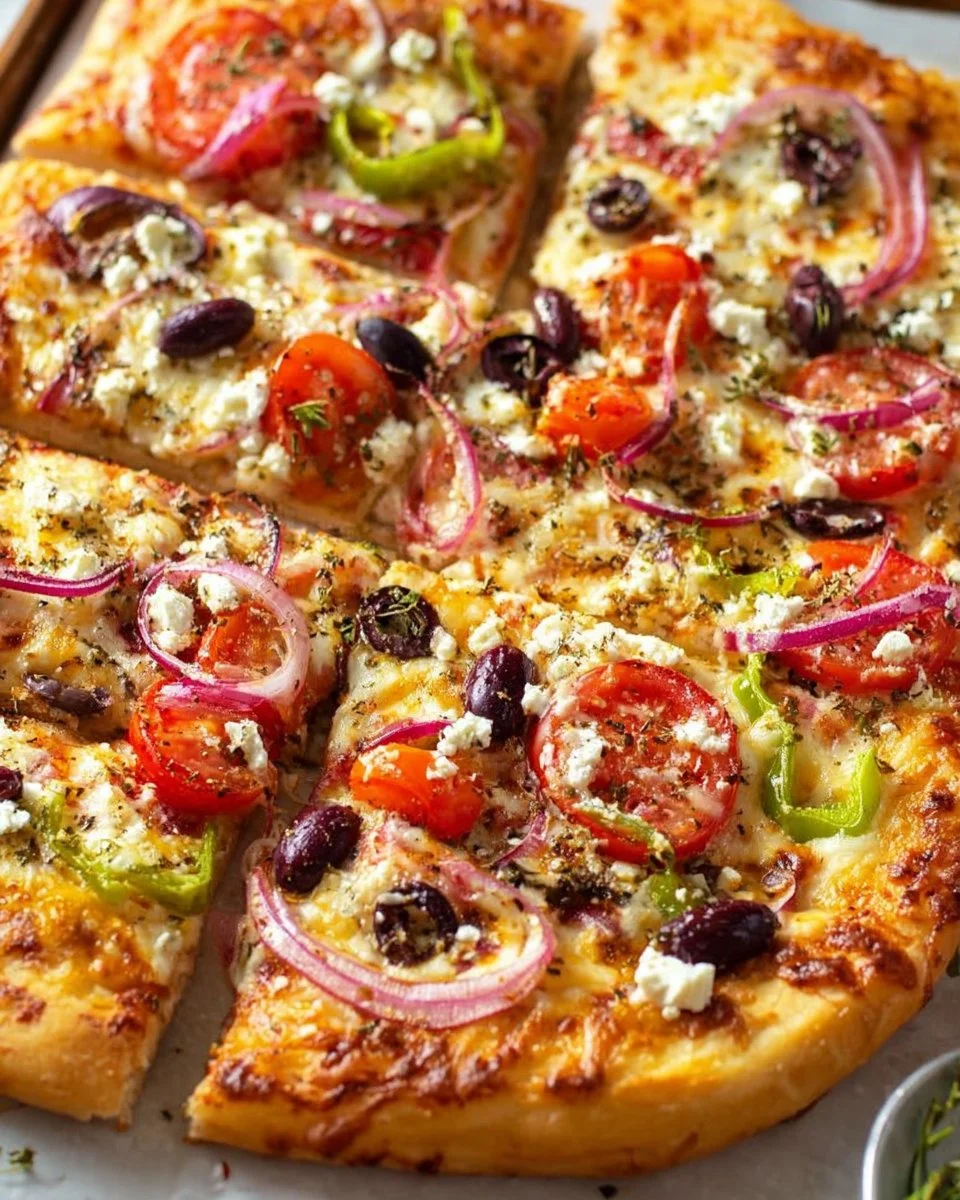
Biting into a slice of Greek Pizza is like embarking on a sun-soaked journey through the Mediterranean. Each mouthful transports you to a quaint seaside taverna, where the air is filled with the enticing aroma of fresh herbs and sizzling cheese. Beneath your fingertips, the crust crackles invitingly, while the toppings create a colorful mosaic of flavors. The tangy crunch of ripe tomatoes mingles with the briny burst of olives and the earthy richness of feta cheese, culminating in an experience that resonates with warmth and joy. This isn’t just pizza; it’s an adventure, a celebration of the vibrant ingredients that come together to create something uniquely delicious.
Imagine a fresh-out-of-the-oven slice, the cheese molten and golden, the vegetables bright and glistening. Each bite encapsulates a harmony of textures: the warm, soft crust provides the perfect contrast to the refreshing crunch of bell peppers and the creamy, crumbly feta that crowns it all. As you savor the flavors, you can almost hear the faint sounds of laughter and clinking glasses from distant tables, highlighting the communal joy that accompanies sharing good food. This is the essence of Greek Pizza—crafted not just for the palate but also for the heart.
Why You’ll Love This Greek Pizza
Greek Pizza stands out in the pizza universe for its delightful amalgamation of flavors and textures. It’s a culinary tapestry woven from high-quality ingredients that celebrate the Mediterranean spirit. On a hot summer night or even a cozy winter evening, this pizza makes for an irresistible treat, perfect for gathering with friends and family. The combination of creamy feta and gooey mozzarella creates a cheese lover’s dream, while the vibrant veggies offer a fresh, crunchy bite that dances on the palate.
Moreover, Greek Pizza is incredibly versatile. You can easily adapt it to suit a variety of occasions, be it a casual pizza night, a lively barbecue, or even a romantic dinner for two. Its vibrant colors and bold flavors draw everyone in, making it a standout dish at any gathering. Beyond its flavor, the health-conscious will rejoice as it incorporates a bounty of vegetables, providing a nutritious option that doesn’t skimp on satisfaction.
Preparation Phase & Tools to Use
Preparing Greek Pizza can be a wonderfully engaging process, akin to crafting a work of art. Keeping a few essential tools close at hand equips you for success.
-
Pizza Stone or Baking Sheet: A pizza stone helps achieve that coveted crust crispiness. If you don’t have one, a baking sheet will work just fine.
-
Rolling Pin: This simple tool assists in stretching your pizza dough to the perfect thickness.
-
Sharp Knife or Pizza Cutter: For clean, effortless slices after baking.
-
Mixing Bowls: Use these for prepping your ingredients without cluttering your workspace.
-
Brush for Olive Oil: A small brush lets you spread olive oil evenly across your dough for that extra flavor, enhancing the entire experience.
Preparation Tips:
- If using homemade dough, ensure it has been adequately rested and risen to achieve the best texture.
- Chop vegetables uniformly to ensure even cooking and create a beautiful presentation.
Ingredients for Greek Pizza
The magic of Greek Pizza lies in its simple yet vibrant ingredients:
-
Feta Cheese: The creamy, tangy element that elevates the flavor profile. You can substitute with goat cheese if you prefer a milder taste.
-
Mozzarella Cheese: This stringy cheese provides a comforting melt. Opt for fresh mozzarella for added richness.
-
Tomatoes: Their juicy sweetness balances the saltiness of the feta. Use vine-ripened or heirloom varieties for the best taste.
-
Onions: Red onions bring a sharpness that contrasts beautifully with the other toppings. Yellow onions can work, but they’ll impart a different sweetness.
-
Olives: Kalamata olives deliver a deep briny note. If you desire more crunch, consider using green olives.
-
Peppers: Bell peppers add a vibrant crunch. Try red, yellow, or green varieties for a colorful appearance.
-
Pizza Dough: Whether homemade or store-bought, the choice is yours. Homemade dough allows for customization regarding thickness and flavor.
How to Make Greek Pizza
-
Preheat your oven to 475°F (245°C). This high temperature guarantees a delightfully crispy crust.
-
On a floured surface, roll out your pizza dough to your desired thickness. The thinner you go, the crunchier your crust becomes!
-
Carefully place the rolled dough on a pizza stone or a baking sheet.
-
With a brush, spread a thin layer of olive oil on the dough, imparting rich flavor.
-
Evenly sprinkle mozzarella cheese over the crust, creating a dreamy layer of oozy goodness.
-
Artfully arrange sliced tomatoes, onions, olives, and peppers on top of the cheese, ensuring each slice gets a bit of everything.
-
Crumble feta cheese generously over the colorful veggie spread, inviting a spark of decadence.
-
Bake in the preheated oven for 12-15 minutes until the crust is golden brown and the cheese bubbles enticingly.
-
Once baked, remove from the oven, let it cool slightly, slice into squares, and serve hot, inviting your guests to dive into flavorful bliss.
Chef’s Notes & Helpful Tips
-
Make-Ahead Tips: Prepare your dough the day before and let it rise overnight in the fridge. It will develop fantastic flavor!
-
Cooking Alternatives: For a quick fix, try using an air fryer set at 400°F (200°C) for about 10 minutes, adjusting timing based on your air fryer model.
-
Customization Ideas: Feel free to add grilled chicken, artichokes, or spinach for additional flavor. Swap out cheeses or veggies based on your preferences!
Common Mistakes to Avoid
Creating the perfect Greek Pizza requires attention to a few details:
-
Overloading Toppings: Resist the temptation to pile on too many toppings. A well-balanced pizza benefits from a good ratio of dough to toppings to ensure even cooking.
-
Ignoring Dough Quality: Always allow dough to come to room temperature before rolling it out. Cold dough will resist stretching.
-
Inadequate Preheating: Failing to preheat your oven correctly can result in a soggy crust. Ensure it reaches the desired temperature before baking.
What to Serve With Greek Pizza
Pair your Greek Pizza with delightful accompaniments that enhance the experience:
-
Tzatziki Sauce: This cool, creamy yogurt dip with cucumber and garlic complements the pizza beautifully.
-
Greek Salad: Fresh cucumbers, colorful tomatoes, olives, and feta create a refreshing contrast to the warm pizza.
-
Roasted Vegetables: Seasonal roasted veggies offer additional texture and flavor.
-
Wine: A chilled glass of Sauvignon Blanc or a crisp Rosé elevates the entire meal.
-
Grilled Meats: Serve alongside grilled chicken or lamb skewers to create a Mediterranean feast.
-
Chickpea Salad: This zesty salad adds protein and freshness, balancing the richness of the pizza.
Storage & Reheating Instructions
Leftover Greek Pizza can thrive! Store individual slices in an airtight container in the fridge for up to 3 days. For longer preservation, consider freezing slices wrapped in parchment paper and stored in a freezer-safe bag for up to 2 months.
To reheat, place the pizza slice directly on a preheated skillet over medium heat for about 5-7 minutes, allowing the crust to regain its crunch while the cheese melts back into gooey perfection. For an oven method, bake at 350°F (175°C) for approximately 10 minutes.
Estimated Nutrition Information
This delicious slice of heaven, when made using the ingredients listed, provides approximately:
- Calories: 300-400 per slice
- Protein: 15-20g
- Carbohydrates: 30-35g
- Fiber: 2g
- Fat: 15-20g
Please note these values may vary based on exact ingredients and serving sizes.
FAQs
1. Can I use store-bought pizza dough?
Absolutely! Store-bought dough saves time and still tastes great. Just remember to let it rest before rolling to avoid elasticity.
2. What can I use as a substitute for feta cheese?
If you’re not a fan of feta, goat cheese offers a creamy, tangy alternative. Alternatively, ricotta lends a softer texture, although it won’t have the same flavor punch.
3. How do I know when my pizza is done?
Look for a bubbling top and a crust that’s golden brown. If you’re unsure, use a thermometer—an internal temperature of 200°F (93°C) signifies a perfectly baked pizza.
4. Can I add proteins like chicken or sausage to my Greek Pizza?
Absolutely! Grilled chicken or sliced sausage would be excellent additions. Don’t overpower the fresh flavors; keep the toppings balanced.
5. How do I make my pizza gluten-free?
Use gluten-free pizza dough available at most grocery stores or make your own using gluten-free flour blends specifically designed for pizza.
Conclusion
Creating Greek Pizza at home isn’t just about satisfying hunger; it’s about crafting a meal that resonates with love and togetherness. As you take that first bite, allow the flavors to mingle and transport you to distant shores, where the sun softly sets on vibrant dishes and laughter fills the air. With each delicious mouthful, you celebrate not only the harmony of flavors but also the joy of bringing loved ones together. So, roll out that dough, gather your toppings, and bring this Mediterranean treasure to your table. You’ll be greeted by smiles and satisfied appetites every time!
Print
Greek Pizza
- Prep Time: 15 minutes
- Cook Time: 15 minutes
- Total Time: 30 minutes
- Yield: 4 servings 1x
- Category: Main Course
- Method: Baking
- Cuisine: Mediterranean
- Diet: Vegetarian
Description
A delightful Mediterranean pizza topped with feta, mozzarella, and vibrant vegetables, creating a flavorful and crispy experience.
Ingredients
- 1 cup Feta Cheese
- 2 cups Mozzarella Cheese
- 2 Tomatoes, sliced
- 1 Red Onion, thinly sliced
- 1/2 cup Kalamata Olives, pitted and sliced
- 1 cup Bell Peppers, sliced
- 1 Pizza Dough (homemade or store-bought)
- Olive Oil, for brushing
Instructions
- Preheat your oven to 475°F (245°C).
- Roll out your pizza dough on a floured surface to your desired thickness.
- Place the rolled dough on a pizza stone or a baking sheet.
- Spread a thin layer of olive oil on the dough.
- Sprinkle mozzarella cheese evenly over the crust.
- Arrange sliced tomatoes, onions, olives, and peppers on top of the cheese.
- Crumble feta cheese generously over the vegetables.
- Bake in the preheated oven for 12-15 minutes until the crust is golden brown.
- Remove from the oven, let it cool slightly, slice into squares, and serve hot.
Notes
Feel free to customize toppings based on your preferences. Pair with tzatziki sauce or a Greek salad for a complete meal.
Nutrition
- Serving Size: 1 slice
- Calories: 350
- Sugar: 3g
- Sodium: 400mg
- Fat: 18g
- Saturated Fat: 9g
- Unsaturated Fat: 7g
- Trans Fat: 0g
- Carbohydrates: 30g
- Fiber: 2g
- Protein: 15g
- Cholesterol: 30mg